Barcode Verification & Inspection
What is Barcode Verification?
Barcode Verification measures the printed quality of the bar code to international (ISO) standards. This is the GS1 standard used by retailers worldwide. All barcodes printed should be verified using an ISO approved verifier to prevent costly rejects, product recalls, and scanning failures. Verification also ensures compliance with industry standards for proper data encoding to maintain supply chain efficiency.
Barcode inspection evaluates and measures the ISO defined quality parameters for linear (UPC) and 2D (QR code, Datamatrix) barcode symbologies. The verifier analyzes the barcode and assigns a grade (A-F) based on the elements of a barcode that affect successful scanning.
A linear barcode verifier (ISO 15416) measures several different parameters of a barcode:
- How black and white it appears to a scanner (Symbol contrast).
- Whether the dark bars have enough difference from the white spaces (Minimum reflectance).
- The least distinct difference between a bar and a space (Edge contrast minimum).
- How much the contrast between black and white varies across the barcode (Modulation).
- The presence of white marks in the bars or dark marks in the spaces (Defects).
- How accurate the different widths of the bars and spaces of the barcode are (Decodability).
- Determines whether a reference decode algorithm is detected for a specific data structure (e.g. UPC) or Symbology (e.g. Code 128) (Decode).
A 2D barcode verifier (ISO 15415) measures these same parameters AND additional ones correlating to 2D barcodes:
- Unused Error Correction (UEC). Determines how much margin exists before the code becomes unreadable.
- Axial and Grid Nonuniformity Fixed pattern damage – evaluates the quality and integrity of the fixed elements.
- Quiet zones – Detects damage in quiet zones of symbol.
- Print Growth – module increases due to ink gain or spread.

How to select the proper verifier:
To help determine the right verifier for your application, these questions need to be answered:
What are the symbol types and sizes that need to be graded?
What is the barcode specification in your application?
Does the verifier need to be portable?
What kind of reporting is required?

Parameters analyzed in barcode inspection:
- Quiet Zones
- Symbol Contrast
- Defects
- Edge Determination
- Reflectance Values
- Modulation
- Reference Decode
- Edge Contrast
- Linear barcodes
- 2D barcodes
- Direct Part Mark (DPM)
- Linear barcode
- 2D barcode
- Direct Part Mark (DPM)
How to select the proper verifier:
- Linear or 2D barcodes
- Portable
- Reporting
- Symbol Size
- Work station
- Quality specification
Complete our Verifier Worksheet to determine the appropriate verifier
Parameters graded by barcode inspection:
– Linear or 1D Symbolgoeis UPC, code 128, code 39, codabar, and others
– 2D symbolgies. QR code, Datamatrix, Databar, Aztec Code and others
Choosing a barcode verifier
How is Barcode Verification Used?
Symbology warrants that the material described herein is free from defects in material and workmanship. Symbology’s liability and obligations under the foregoing warranty are expressly and exclusively limited to replacement of the material found to be defective at seller’s place of business and buyer assume all risk and liability from the use of the material whether used singly or in combination with other goods. This warranty does not extend to, and buyer hereby waives all claims and damages for, and any and all consequential damages, however occasioned, including but not limited to loss of use and lost profits.
There are no warranties which extend beyond the description on the face hereof. The implied warranties of merchantability and fitness for a particular purpose are hereby disclaimed and seller neither assumes nor authorizes any person to assume for seller any additional liability in connection with the sale or use of the goods sold, and there are no oral agreements or warranties collateral to or affecting this agreement.
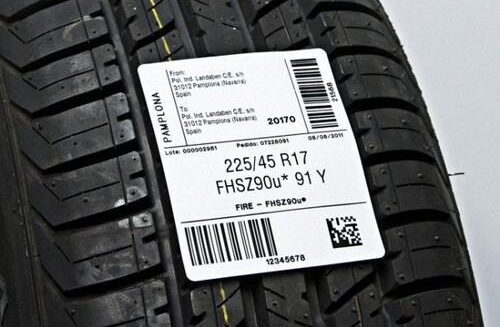
Grade Barcode Quality
Ensure Readability Along the Supply Chain